
Balkan Fall Comfort Foods and Family Traditions
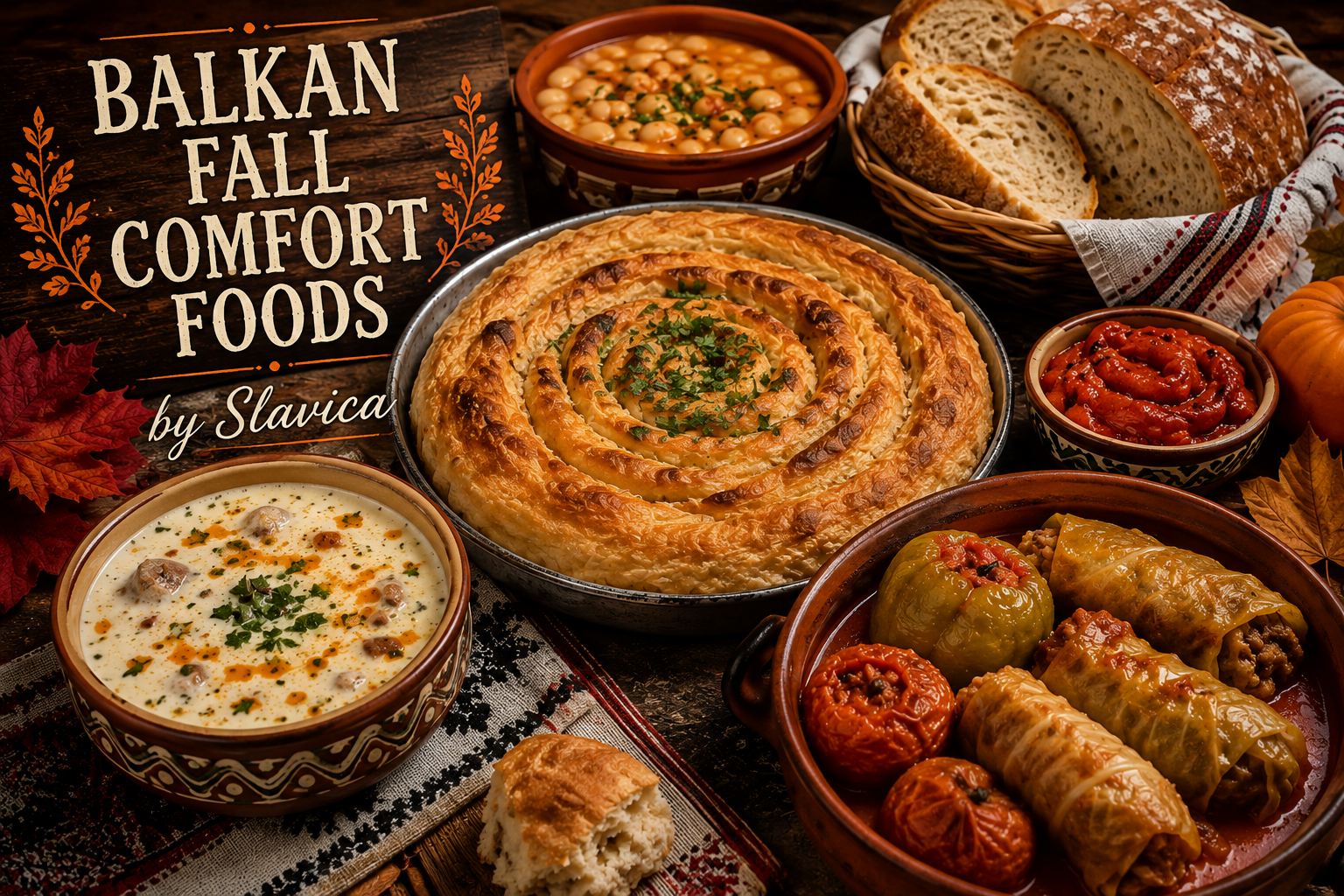
As the warm, golden hues of August begin to fade into the crisp, sharp mornings of September, a quiet shift occurs in every Balkan home. It is a rhythm as old as the mountains, a seasonal transition that is felt first in the chest, and then in the nose. In our culture, autumn is not merely a transition of weather; it is a spiritual return to the hearth, guided by the soothing, smoky aromas of roasting peppers, simmering stews, and freshly baked bread.
Growing up in the Balkans, this time of year was defined by a beautiful, communal concept known as ‘Zimnica’ - the preparation of food for the long winter months. It is a process of preservation, yes, but more than that, it is a way of locking the summer's sun and soil into glass jars, ensuring that the warmth of the seasons and the connections between neighbors survive the cold winter snows. As a registered nurse, a wife, and a mother, I have always believed that wellness begins with how we nourish our bodies and our spirits. The traditions of ‘Zimnica’ represent the ultimate intersection of both: simple, clean, earth-grown ingredients prepared with patience, slow methods, and deep love, surrounded by the laughter of family and the wisdom of our grandmothers.
In our modern, fast-paced world, it is easy to lose touch with these generational rhythms. We buy our relishes from supermarket shelves, stripped of their stories and their soul. But for me, keeping these traditions alive is a way of memory-making, of ensuring my children know where they come from and feel that same sense of home and belonging that I felt when peeling warm roasted peppers on my grandmother's porch. Whether you are seeking to recreate the scent of a historic bazaar or a cozy village kitchen, this guide is an invitation to slow down, gather your loved ones, and let the comforting flavors of our heritage fill your home.
1. The red gold of the Balkans: relishes of the hearth
Ajvar - the sacred vegetable caviar
You cannot speak of a Balkan autumn without speaking of ’Ajvar’ (pronounced "aye-vahr"). The very name is derived from the Turkish word ‘havyar’, meaning "caviar". In the nineteenth century, as domestic sturgeon caviar from the Danube became scarce, Belgrade restaurants began marketing a roasted red pepper relish as 'Serbian caviar', a nod to its luxurious, buttery mouthfeel and deep, precious flavor.
True Ajvar is not a quick weekday condiment; it is a labor of love that traditionally spans two full days and requires a dedicated team of family and neighbors. My fondest childhood memories are of the late summer weekends when our neighborhood would unite, roasting sweet red 'Roga' (bull's horn) peppers and old-school purple eggplants over the open flames of a wood-burning stove, specifically the beloved Croatian and Bosnian stove called the ‘smederevac’.
To make authentic Ajvar at home, you must choose your peppers with care. Look for meaty, sweet bull's horn peppers - known in our regions as ‘Roga’, ‘Kurtovka’, or ‘Slonovo Uvo’ (elephant's ear) - which have low water content and are much easier to peel after roasting. If these are hard to find in your local market, common red bell peppers make a fine substitute, though they will require a bit more simmering time to evaporate their juices.
The ritual begins by roasting the peppers and eggplants until their skins are thoroughly blackened and blistered. The hot vegetables are immediately transferred to plastic bags or deep bowls sealed tightly with plastic wrap. This crucial step traps the steam, causing the skins to loosen and slide off effortlessly. The next day, the real communal work begins. With gloves on to protect your fingers from turning bright red, your team must peel every pepper, gently cut open the flesh to remove the stems and scrape out the seeds, and quickly rinse them in water.
Next, the vegetables are ground - ideally using a vintage manual meat grinder to preserve the perfect, rustic 'chunky salsa' consistency, avoiding the temptation to over-process them into a smooth hummus-like paste. The ground mixture is placed in a wide, short stockpot with oil. We cook it on low heat for three to four hours, stirring continuously-every couple of minutes-with a long wooden spoon. This constant stirring is essential; if the Ajvar burns even a single millimeter at the bottom of the pot, the entire batch is ruined. As the mixture simmers, we add oil gradually, about half a cup every fifteen minutes, allowing the peppers and eggplants to slowly absorb the fat and develop a glossy, creamy texture.
Forty-five minutes before the end of cooking, we stir in a tablespoon of sugar and a couple of tablespoons of salt, taking care not to over-season early as the flavors will concentrate intensely as the water evaporates. The Ajvar is done when it becomes thick and velvety, and when you draw a wooden spatula across the bottom of the pot, you can clearly see the metal bottom before the mixture slowly slides back together. We slowly transfer the piping hot spread into clean, sterilized glass jars, pushing the mixture down meticulously with a spoon to release any trapped air bubbles, which can cause the spread to spoil. The filled jars are returned to a warm, turned-off oven overnight to form a thin, protective crust on top. The following day, we pour a spoonful of hot sunflower oil over the crust to seal it, screw the lids on tightly, and store them in our dark, cool cellars.
If the two-day process feels too daunting for your busy schedule, you can still experience this sacred tradition by stocking your pantry with Podravka Ajvar Mild Roasted Red Pepper Spread 690g or the premium, rustic Mamas Mild Ajvar Roasted Pepper Spread 550g, both of which capture that authentic, slow-cooked hearthside sweetness.
Pindjur - the chunkier, tomato-infused cousin
While Ajvar is the undisputed king of the larder, ‘Pindjur’ (pronounced "pin-jooh-r") is its brighter, tangier, and much faster-to-prepare cousin. Originating in North Macedonia, this rustic relish has become a staple of winter kitchens across Serbia, Croatia, and Bosnia. What sets Pindjur apart from Ajvar is the beautiful addition of ripe tomatoes, which lend a juicy, sweet acidity and a chunky, salad-like texture.
To prepare an authentic Pindjur, we roast both red peppers and ripe Roma or beefsteak tomatoes until their skins shrivel and blister. The tomatoes are skinned, mashed with a potato masher, and brought to a simmer in a large pot with sunflower oil, sugar, and white wine vinegar. After the tomato juices have simmered and thickened for an hour, we add the roasted red peppers-which have been peeled, de-seeded, and cut into half-inch strips. The mixture is simmered for another forty-five minutes, followed by the addition of sliced garlic cloves, minced fresh parsley, and a whole mild chili pepper for a subtle warmth. The hot, fragrant Pindjur is then ladled into hot, sterilized jars, tightly sealed, and flipped upside down on their lids to cool completely. It is the perfect accompaniment to a rustic ‘meza’ platter, served alongside fresh cheeses, cured meats, and warm crusty bread.
2. The magic of flour and water: Balkan dough traditions
Burek - hand-stretched love in paper-thin layers
There is a saying in Bosnia: 'All pies are pies, but burek is the king.' In our culture, a woman's culinary prowess was historically judged by her ability to stretch homemade phyllo dough-known as ‘jufka’ - until it was as thin and translucent as cigarette paper. Stretching ‘jufka’ is a meditative, therapeutic act that connects us directly to our grandmothers, who made this complex art look as effortless as breathing.
The magic of ‘jufka’ lies in its simplicity: it requires only high-quality white flour, salt, warm water, and sunflower oil. One of the most critical secrets of a tear-free dough is using a brand-new bag of flour; flour that has been sitting in an opened bag in the pantry loses its moisture balance and will rip endlessly during stretching.
We begin by mixing the flour, salt, and oil in a large bowl, gradually adding warm water as we knead. The dough must be worked vigorously with the strength of your hands and upper body for at least ten to fifteen minutes. This intense kneading activates the gluten, turning a shaggy mass into a smooth, elastic ball with the consistency of a soft earlobe. We dab the ball generously with oil, wrap it in plastic wrap and a clean kitchen towel, and let it rest in a warm room for at least an hour to allow the gluten to fully relax.
Next, we divide the dough into three equal parts, shape them into small balls, oil them again, and let them rest for fifteen minutes. Each ball is rolled out to about ten inches in diameter, brushed with oil, and allowed to rest one final time.
To stretch the dough, we cover our large kitchen table with a clean, 100% cotton tablecloth, which provides the traction needed to expand the sheet. We lift the dough gently, letting its own weight pull it down, and lay it in the center of the table. Moving around the table, we slip our hands under the dough, palms down and knuckles up, gently pulling the edges toward ourselves in slow, steady waves. We walk in circles, stretching a little at a time, until the dough covers the entire table and hangs over the sides. The thicker, rustic edges are cut away or carefully thinned with our fingers.
For a traditional Bosnian Burek, the filling consists of twice-ground beef or finely diced chuck steak mixed with minced onions, salt, and plenty of black pepper. We lay the seasoned, raw meat filling in a thin line along the edges of our stretched dough. Using the tablecloth to assist us, we lift the edges, rolling the dough over the meat into long, thin cylinders. These stuffed rolls are cut and shaped into tight spirals-which we call ‘zvrk’ - or lined in parallel columns in a greased baking pan. We bake the Burek at 450°F for the first fifteen minutes until it blushes a deep golden-brown, then lower the oven to 400°F to cook the meat thoroughly. The moment the pie emerges from the oven, sizzling and fragrant, we sprinkle it generously with a boiling mixture of water and melted butter and cover it with a kitchen towel for twenty minutes to soften its layers.
For busy weeknights when we crave those comforting, flaky layers but lack the hours required to stretch ‘jufka’ from scratch, we opt for ‘Layered Burek (Slagani Burek)’. This no-fuss bakery-style pie utilizes flat, pre-made phyllo sheets from our freezer. We simply layer the store-bought sheets in a round baking pan, brushing each layer with a mixture of melted butter and bubbly mineral water. We scatter our seasoned ground beef and minced onions between every few layers, building a quick, comforting casserole that bakes to a crispy, juicy golden perfection in just thirty minutes.
Protected Heritage - Poljički Soparnik and Pogacha
In the historic Poljica region of southern Dalmatia, between Split and Omiš, lies the birthplace of ‘Poljički Soparnik’ - a rustic, chard-filled flat pie so unique that it has been awarded protected status at the European Union level and declared an intangible cultural heritage of Croatia. Traditionally, Soparnik is baked over an open hearth called a ‘komin’, buried directly under the hot coals and ashes of dried grapevines.
At home, we can capture this ancient flavor in a standard oven. We roll out a simple, firm dough made of flour, water, salt, and olive oil into two large circles. We fill the center with a rustic mixture of finely chopped Swiss chard leaves, spring onions, fresh parsley, and a drizzle of olive oil. We cover it with the second dough circle, twist and pinch the edges to form a decorative, airtight seal, and bake it until blistered. As it comes hot from the oven, we paint the surface with extra virgin olive oil and rub it generously with crushed garlic cloves before cutting it into traditional diamond-shaped pieces.
No Balkan autumn table is complete without ‘Pogacha (Pogača)’, our daily, yeast-free bread that can be whipped up in under an hour. Unlike yeasted breads that require hours of rising, Pogacha uses baking soda and baking powder as leavening agents, resulting in a dense, rustic bread that is remarkably easy to digest. We combine our flour, baking soda, baking powder, and salt, then work in an egg, milk, and plain yogurt (or a 50/50 mix of yogurt and kefir). We knead the dough by hand for ten minutes until it is soft and smooth, press it into an oiled round pan with our fists, and pierce the surface with a fork to allow the steam to escape. Baked until it develops a deep, golden blush, we immediately smear the crust with butter and wrap it in a clean kitchen towel to soften. The warm, comforting aroma of a freshly baked Pogacha broken open by hand at the dinner table is a sensory memory that defines home for every Balkan child.
To elevate your dough traditions and ensure that perfect, flaky lift in your baking, I always keep my pantry stocked with Favorit Oblande Wafer Sheets 190g for classic, sweet layered wafer tortes, and a bottle of bubbly mineral water to ensure my layered burek rises beautifully.
3. Hearty stews & soups: the true kings of fall
Sarma - the undisputed queen of winter
If there is one dish that holds the absolute royal title in the Balkan winter kitchen, it is ‘Sarma’ - our traditional stuffed sour cabbage rolls. Sarma is more than a recipe; it is a cultural phenomenon. The arrival of the first cold autumn wind is not announced by the thermometer, but by the rich, sour, and smoky aroma of a massive pot of Sarma simmering on the stove for hours.
The soul of a true Sarma is the sour cabbage. We do not use fresh cabbage; indeed, to us, Sarma made with fresh cabbage is an entirely different, lesser dish. We use whole heads of fermented cabbage-such as the incredible, authentic Jelenko Ogulin Whole Pickled Cabbage Approx 4 to 5 lbs, which is naturally fermented to a perfect, tangy acidity.
The stuffing is a rich mixture of ground beef, ground veal, or a combination of beef and pork, mixed with minced onions, garlic, round-grain white rice, and finely diced smoked beef or bacon. To bind the stuffing and ensure a tender, melt-in-your-mouth texture, we mix the meat and rice thoroughly with our hands, adding a splash of cold milk to soften the mixture.
We carefully peel the sour cabbage leaves from the head, quickly dipping each leaf in cold water to wash away any excess saltiness. We cut out the tough middle vein and slice the large leaves into halves or quarters. The golden rule of Sarma-making is that size matters: the smaller the rolls, the more delicate and delicious they will be. We place a tablespoon of filling on the edge of a leaf, fold one side over, roll it up tightly like a small burrito, and tuck the open end in with our fingers.
At the bottom of our deep pot, we prepare a rustic roux with oil, flour, tomato sauce, and hot water. We scatter a layer of chopped leftover cabbage and cabbage veins on top of the roux, then layer our small Sarma rolls tightly in concentric circles, wedging pieces of smoked beef, bacon, or pork ribs between the rolls. We submerge the layers in water or beef broth, cover the pot, and let it simmer over low heat for a full three hours. Sarma is never stirred during cooking; instead, we gently shake the pot from side to side occasionally to prevent sticking. It tastes spectacular on the day it is made, but it is a well-known secret that Sarma reaches its true, harmonious peak on the second and third days.
To make your preparation even simpler without sacrificing that generational flavor, you can use the Podravka Fant Seasoning Mix for Stuffed Peppers and Cabbage 60g, which contains the perfect, pre-measured balance of garlic, onion, and spices to bring your Sarma stuffing together effortlessly.
Pasulj (Grah) - the king of fall bean soup
While Sarma is our queen, ‘Pasulj’ (also known as ‘Grah’) is the undisputed king of fall. This thick, comforting bean soup is a rustic masterpiece made of dry white beans, smoked meats, and a deep, red paprika roux.
We begin by soaking our dry white beans-such as Cannellini, Great Northern, or Navy beans - in water on the countertop overnight. The next day, we discard the soaking water, which helps eliminate the compounds that cause indigestion and bloating, and wash the beans thoroughly.
In a deep pot, we sauté minced onions, garlic, and diced carrots in oil, then add our soaked beans and comfort meats-such as cured ham, smoked bacon, or dried beef. We cover the ingredients with six to seven cups of water, throw in a bay leaf and some stock powder, bring it to a rolling boil, and then simmer on low for two and a half hours until the beans are buttery and tender.
Just before the beans are finished, we prepare our signature thickening roux: we heat sunflower oil in a small pan, whisk in a tablespoon of flour until smooth, and stir in a tablespoon of sweet or smoky red paprika. This fragrant, bubbling red roux is whisked directly into the boiling soup, simmering for five final minutes until the broth transforms into a thick, comforting gravy that we garnish with fresh parsley and serve alongside a crisp, acidic cabbage salad.
To add a rich, smoky depth to your Pasulj or serve as a spectacular centerpiece for a cozy fall evening, we highly recommend adding some sliced Brother and Sister Bosanska Sudzuka Dry Cured Beef Sausage Approx. 0.75 lbs to the pot. This traditional dry-cured beef sausage infuses the beans with a concentrated, garlic and spice aroma that is simply unmatched.
Slow - cooked masterpieces: Čobanac and Gulaš
For outdoor gatherings and large family celebrations, the Slavonian region of Croatia gives us ‘Čobanac’, or shepherd's stew - a rich, fiery meat stew traditionally prepared in a copper cauldron over an open wood fire. It utilizes three distinct types of meat added in order of toughness: first beef, then pork, and finally veal shoulder, sautéed with a massive quantity of onions (a 1:1 meat-to-onion ratio). The stew is simmered slowly with a generous amount of sweet and hot Slavonian ground paprika, tomato puree, and red wine. In the final ten minutes of cooking, we spoon small, rustic flour and egg dumplings directly into the bubbling broth, creating a hearty, spicy meal that warms the body from the inside out.
For a comforting Sunday dinner inside, we turn to traditional Croatian Goulash (Gulaš), a slow-cooked beef stew prepared under the rule of 'low and slow'. We marinate cubes of beef chuck steak in mustard, salt, pepper, and red paprika for an hour before searing them in hot pork fat or vegetable oil. We sauté finely diced onions and grated carrots for fifteen minutes until they are soft and mushy, return the beef to the pot with bay leaves and garlic, pour in a cup of red wine, and simmer slowly for two hours, adding beef stock gradually until the meat is so tender it melts in your mouth.
4. The Earth's harvest - Balkan vegetarian masterpieces
Tavče Gravče - Macedonian baked beans
For those seeking a pure, plant-based comfort food, the traditional Macedonian dish ‘Tavče Gravče’ (pronounced "tahv-che grahv-che," meaning "beans in a pan") is an absolute masterpiece. Made with flat te beans - ideally the large, meaty Macedonian ‘Tetovac’ bean - this dish represents the beautiful simplicity of Balkan vegetarian cooking.
We soak our dry white beans overnight, cook them the next day until they are soft but keep their shape, and strain them, reserving a few cups of the starchy cooking water. In a separate pan, we sauté yellow onions in a generous amount of vegetable oil for twenty minutes until they crystalize and turn sweet.
We transfer the caramelized onions to a traditional unglazed clay baking dish, layer our cooked beans on top, and season generously with salt, pepper, and a massive amount of high-quality red paprika, which defines the sweet, smoky, or spicy character of the dish. We pour our reserved bean cooking water over the top and bake it in a hot oven for forty minutes until the liquid reduces and the beans develop a beautiful, slightly crispy, non-dry crust on top.
Potato stuffed peppers: Paprike Punjene Krompirom
Another spectacular, gluten-free vegetarian dish is ‘Potato Stuffed Peppers’ (‘Paprike Punjene Krompirom’). This traditional Bosnian casserole replaces the usual heavy meat filling with a light, velvety potato stuffing.
We choose sweet, pale yellow bell peppers of approximately the same size, wash them, and pull out their stems and seeds. We peel and dice Russet or Yukon Gold potatoes into tiny cubes, about the size of a quarter of a die, and mix them in a bowl with minced fresh parsley, black pepper, stock powder, and a few tablespoons of heavy cream.
We stuff the peppers to the top, arrange them tightly in a generously oiled baking pan, pour in a cup of water, and bake in a hot oven. We flip the peppers halfway through, so they blush evenly on all sides. In the final twenty minutes of baking, we pour a cup of rich heavy cream over the blistered peppers, letting it simmer and reduce into a decadent, bubbly sauce that is delicious when scooped up with warm bread.
For a savory, salty snack to serve alongside your vegetarian baked dishes or as a rich topping for mashed potatoes, a bowl of crispy PV Cvarci Homemade Pork Cracklings 8oz adds that perfect, traditional crunch that every Balkan family loves.
5. Sweet bridges between generations
Tufahije - Bosnian poached walnut-stuffed apples
To conclude a rich, slow-cooked Balkan meal, we serve desserts that are sweet, elegant, and fragrant with heritage. ‘Tufahije’ (pronounced "too-fah-hee-yeh") is a centuries-old Bosnian dessert of Ottoman origin, consisting of whole poached apples stuffed with a sweet walnut filling and topped with cold whipped cream.
To make Tufahije, we peel and core sturdy, sour Granny Smith apples, taking care not to drill all the way through, and rub them with fresh lemon juice to prevent browning. We simmer the apples gently in a boiling simple syrup of water, sugar, and lemon juice for ten minutes until they are easily pierced with a fork but still hold their shape.
We remove the apples to cool, and mix ground walnuts with hot milk, melted butter, and a tablespoon of sugar to form a rich, thick paste. We stuff the apples generously with this walnut filling, place them in a deep dish, and pour some of our leftover simple syrup around them. Kept in the refrigerator to chill, we serve each apple in a small glass dessert bowl, topped with a tall swirl of fresh whipped cream and a single walnut half. The contrast between the cold, sweet, whipped cream, the rich walnut paste, and the slightly tart, soft apple is an absolute dream.
To ensure your Tufahije simple syrup has that delicate, professional aroma of vanilla and sugar, always add a packet of Podravka Dolcela Vanilla Sugar 10g to your boiling poaching liquid.
Plazma - Malina Torta: creamy, no-bake nostalgia
For celebrations and birthdays, the ultimate modern Balkan dessert is the ‘Plazma-Malina torta’ - a light, creamy, no-bake cake that layers a sweet, ground biscuit filling with a tangy raspberry sauce.
The defining ingredient of this cake is Bambi Lane Plazma Biscuits 300g, the beloved, honey and vanilla-scented Serbian biscuit that is a symbol of childhood nostalgia for millions. We mix Bambi Lane Ground Plazma Biscuits 300g with Greek yogurt, sour cream, powdered sugar, and a packet of vanilla sugar. If the filling is too thick, we thin it slightly with a splash of milk until it is smooth and easy to spread.
We prepare a bright raspberry filling by cooking frozen raspberries with sugar and mixing in dissolved gelatin. In a springform pan, we place our first pre-made dry sponge cake layer, moisten it with milk or chocolate milk, and layer our creamy Plazma filling and cooling raspberry sauce on top, repeating the layers before letting it set in the refrigerator for four hours. Covered in fresh whipped cream and decorated with whole raspberries and crushed Plazma biscuits, it is a magnificent, refreshing cake that brings our childhood memories straight into the present day.
Keeping the hearth burning across the miles
Whether you are cooking in Belgrade, Split, Sarajevo, or Parma, Ohio, the kitchen is where our stories live. It is the place where we honor our ancestors, nurture our children, and welcome our friends with open arms. No matter how far you may travel from the mountains of the Balkans, you can always keep your family traditions alive and healthy by visiting the family-owned PV Euro Market. For over twenty years, this wonderful market has served as a sanctuary of culture and taste, shipping our beloved European comfort foods, meats, cheeses, and baking ingredients to homes across the entire United States.
By filling our kitchens with the comforting scents of slow-simmered Sarma, warm yeast-free Pogacha, and sweet poached Tufahije, we keep the hearth of our homeland burning bright, preserving the precious links that connect our past, our present, and our future. Prijatno and bon appetit!
FAQ:
1. What are the ultimate Balkan fall comfort foods to try first?
If you want to warm your home on a crisp day, start with Sarma (fermented sour cabbage rolls stuffed with ground meat and rice), a slow-simmered pot of Pasulj bean soup with smoked meats, or a flaky, hand-stretched meat pie like Burek. Serve them alongside warm, yeast-free Pogacha bread and a jar of sweet, smoky Ajvar.
2. What exactly makes a dish a Balkan fall comfort food, and which ones should I start with?
An overview of the autumn rhythm of zimnica (preservation) and patience, introducing beginners to Ajvar and Pindjur, flaky Burek, slow-cooked Pasulj, baked Tavče Gravče, Čobanac, traditional Croatian Gulaš, yeast-free Pogacha, and the undisputed "Queen of Winter," Sarma. As a nurse, I've highlighted why yeast-free baking supports gentle digestion and how our traditional soaking methods prevent bloating and indigestion.
3. What is the actual difference between Ajvar and Pindjur?
Breaking down the ingredients, textures, and cooking times that separate creamy, eggplant-infused Ajvar from bright, tomato-forward, and chunkier Pindjur, as well as their fiery cousin, Lutenica.