
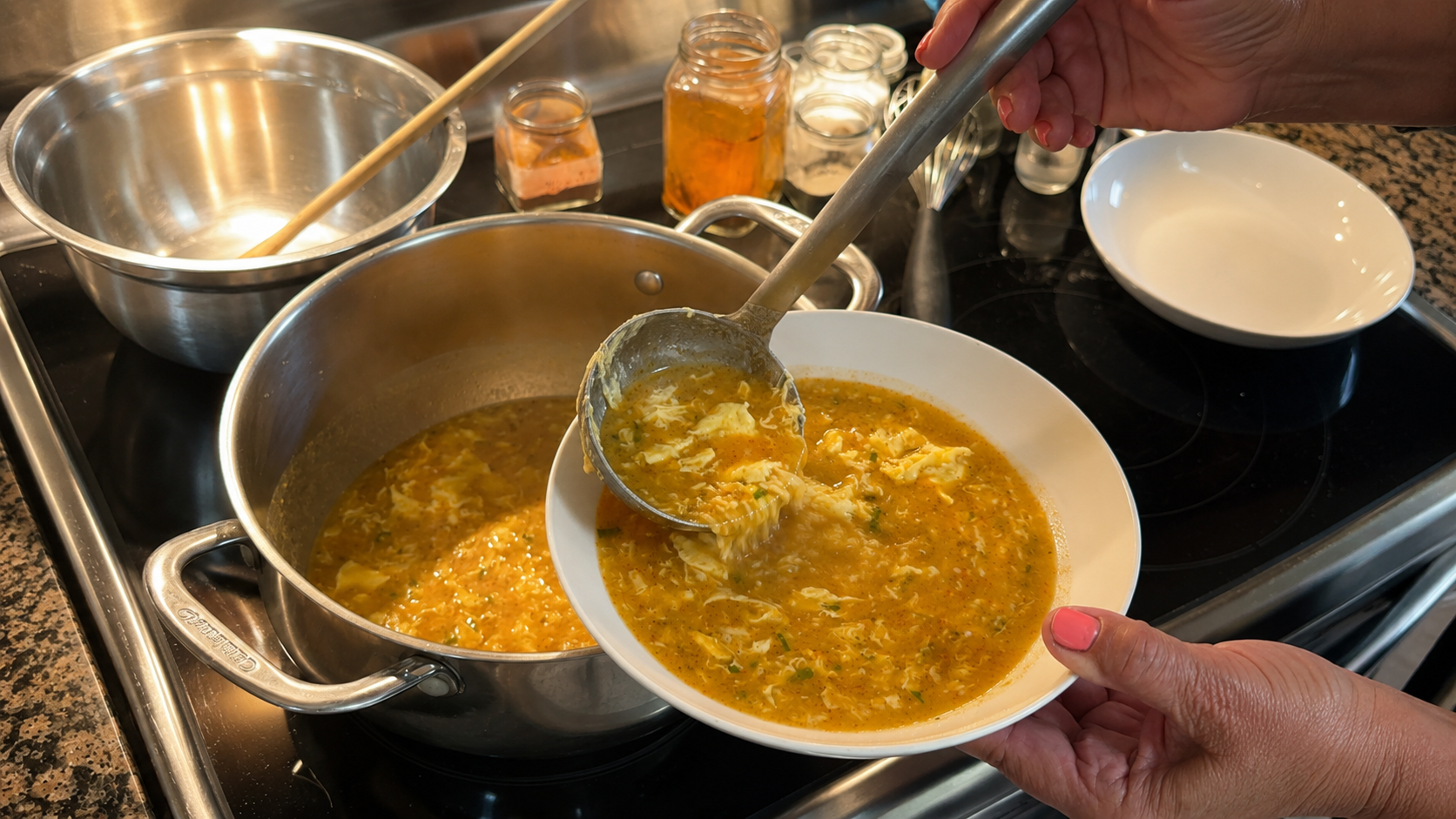
Djurdja serving freshly made Prežgana Supa, prepared the same way our family has enjoyed it for generations.
Some of my favorite memories are connected to the simple foods we made at home. Prežgana supa was one of those meals. I made it for my children when they were young, and now I make it for my grandchildren. They especially love it for breakfast, served warm with pieces of fresh or lightly toasted bread.
This soup is not fancy or complicated. It is made from a few basic ingredients that most families already have in the kitchen: flour, oil or lard, paprika, seasoning, eggs, and water. Yet when the flour is slowly browned and the eggs are stirred into the hot broth, those simple ingredients become something deeply comforting and delicious.
My sons Milan and Dane grew up eating prežgana supa, and it is still one of their favorite breakfast meals. For our family, this soup tastes like home.
What Is Prežgana Supa?
Prežgana supa is a traditional browned flour soup found throughout the Balkans and nearby parts of Central Europe. In English, it may be called browned flour soup or toasted flour soup.
The word prežgana refers to the flour being cooked in fat until it turns golden and develops a toasted aroma. Water is then added to form a light broth, and the soup is seasoned with paprika, salt, black pepper, garlic, or Vegeta. Beaten eggs are often added near the end, creating soft ribbons and small pieces throughout the soup.
Every household has its own version. Some families prepare it very lightly, while others make it thicker. Some add caraway, while others use garlic or sweet paprika. In our family, we make it with paprika, Vegeta, eggs, parsley, and torn bread.
A Humble Soup with a Long History
Prežgana supa is often described as a traditional peasant food because it was created from inexpensive ingredients that rural families commonly kept at home. Flour, lard or oil, water, and eggs could be turned into a warm and filling meal without requiring meat or an expensive broth.
Browning the flour was especially important because it created a deeper and richer flavor from very little. When an egg was available, it could be added to make the soup more nourishing and satisfying.
Although it began as a humble and economical meal, prežgana supa became an important comfort food across generations. Many people remember eating it as children, especially for breakfast, during cold weather, or when they were not feeling well. Like many traditional Balkan dishes, its true value is not in expensive ingredients but in the memories connected to it.
How I Make Prežgana Supa
This is the way I prepare it for my family. The amounts do not have to be exact. Like many old family recipes, it is made by watching the color, tasting the broth, and adjusting the seasonings as it cooks.
Ingredients
- 3 tablespoons Zvijezda Sunflower Oil 1L or PV Domaći Proizvodi Pure Homemade Pork Lard 16oz.
- 3 level tablespoons Five Roses All Purpose Flour.
- Approximately 6 cups water.
- 1 to 2 teaspoons Podravka Vegeta All Purpose Seasoning, adjusted to taste.
- A small amount of Solana Pag Fine Sea Salt, adjusted to taste.
- 1 teaspoon Pride of Szeged Hungarian Style Sweet Paprika.
- A pinch of Prymat Ground Black Pepper.
- A small pinch of Pride of Szeged Hungarian Style Garlic Powder.
- 3 large eggs, lightly beaten.
- Fresh parsley, finely chopped.
- Fresh or lightly toasted crusty bread, torn into small pieces.
Preparation
- Warm the fat: add the sunflower oil or pork lard to a medium soup pot and warm it over medium-low heat.
- Brown the flour: add the flour and begin stirring immediately with a wooden spoon or whisk. Continue cooking and stirring until the flour becomes golden and develops a warm, toasted aroma. Do not leave the pot unattended because the flour can darken quickly.
- Add the paprika: stir in the sweet paprika and cook it only briefly so it releases its color without burning.
- Add the water: slowly pour in the water while whisking continuously. Add it carefully because the hot flour mixture may steam and bubble.
- Season the soup: add the Vegeta, salt, black pepper, and garlic powder. Bring the soup to a gentle simmer.
- Simmer: allow the soup to cook for approximately 8 to 10 minutes, stirring occasionally. It should thicken slightly but remain light enough to eat with a spoon.
- Add the eggs: slowly pour the beaten eggs into the simmering soup while gently stirring in one direction. The eggs will form soft ribbons and small pieces throughout the broth.
- Finish and serve: simmer for another 1 to 2 minutes, taste the soup, and adjust the seasonings. Ladle it into bowls, sprinkle with parsley, and add torn pieces of fresh or toasted bread.
The Most Important Step: Browning the Flour
The most important part of the recipe is browning the flour slowly. It should become golden and fragrant, but it should not burn. If the flour becomes too dark, the soup can taste bitter.
Stir continuously and watch the color closely. Once the flour smells toasted and reaches a warm golden shade, it is ready for the paprika and water.
Fresh Bread or Toasted Bread?
In our home, we often tear fresh crusty bread directly into the bowl. The bread absorbs the flavorful broth and becomes soft while still giving the soup a satisfying texture.
You can also toast the bread first if you prefer it to remain firmer for a little longer. Both ways are traditional, and it really depends on how your family likes it.
Prežgana supa is sometimes prepared with noodles in other households, but our family version is served with egg ribbons and bread.
Why We Eat It for Breakfast
For many people in the United States, soup may not sound like a typical breakfast. In Balkan homes, however, a warm savory meal in the morning was not unusual, especially during colder months.
Prežgana supa is warm and filling without being too heavy. It is quick to prepare, uses simple pantry ingredients, and gives the family something comforting before the day begins. That is why it became one of our favorite breakfast meals.
I made it for my children when they were growing up, and now I make it for my grandchildren. Watching them enjoy the same soup brings back so many memories.
A Recipe Passed from One Generation to the Next
Some recipes are remembered because they are elaborate. Others remain in the family because of the way they make us feel. Prežgana supa belongs to the second group.
The ingredients are simple, but the memories connected to this meal are priceless. It reminds us that good food does not have to be expensive or complicated. Sometimes the most comforting meals are the ones made from only a few ingredients, prepared slowly and served with love.
For anyone who grew up eating prežgana supa, I hope this recipe brings back warm memories. For anyone trying it for the first time, I hope it becomes a new comfort food in your home.
Prijatno!
Prežgana Supa, Ready to Serve
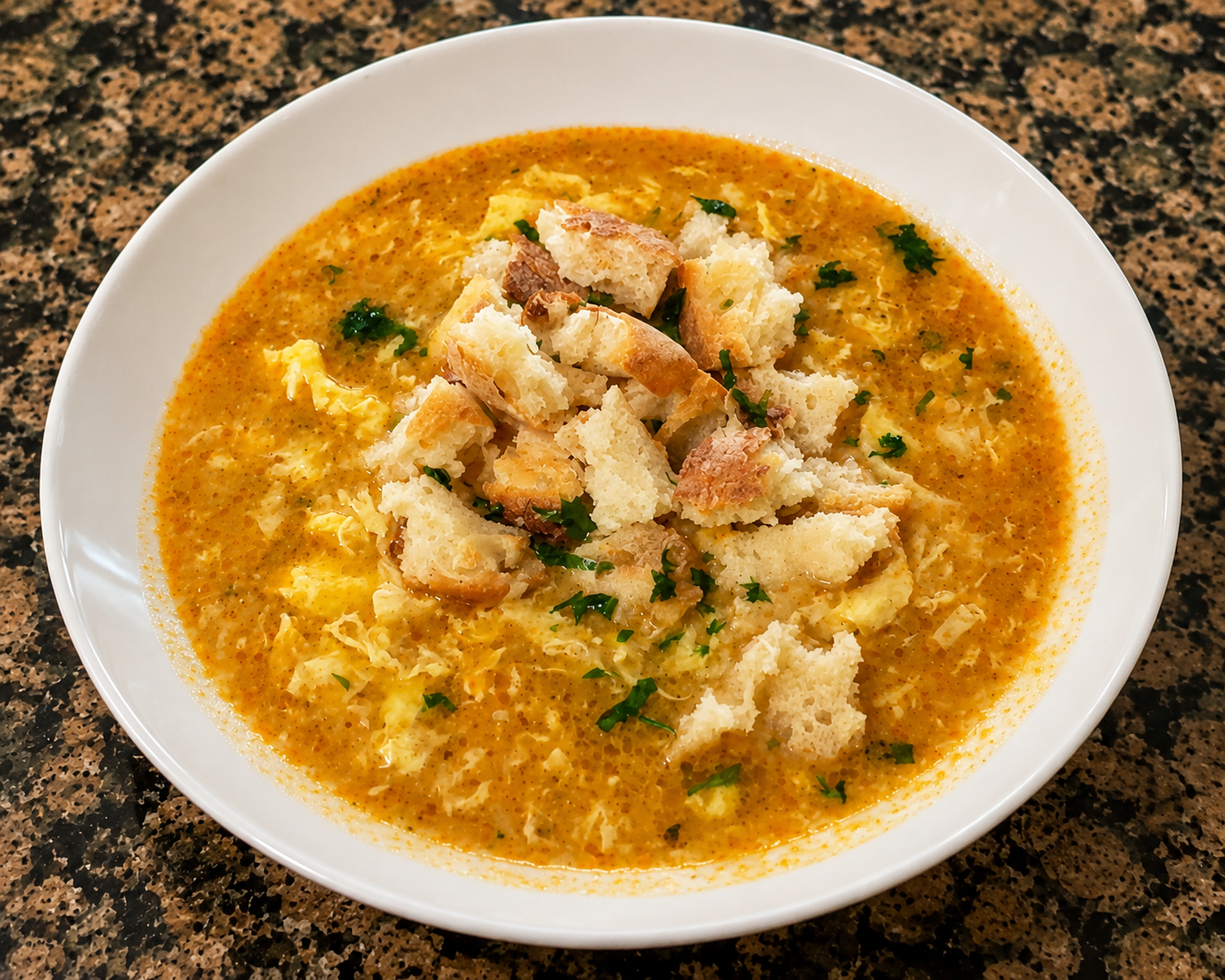
Traditional Prežgana Supa served with fresh parsley and torn crusty bread.
Frequently Asked Questions
1. What does Prežgana Supa mean in English?
Prežgana supa is usually translated as browned flour soup or toasted flour soup. The name refers to flour being cooked in oil or lard until it develops a golden color and toasted flavor.
2. Is Prežgana Supa considered peasant food?
Yes, it is often described as a traditional peasant dish because it was made from inexpensive ingredients that most rural households already had, including flour, fat, water, eggs, and basic seasonings. Today, it is valued as a comforting family dish rather than simply an economical meal.
3. Is Prežgana Supa Serbian, Croatian, or Slovenian?
Versions of browned flour soup are found across several Balkan and Central European food traditions, including Serbia, Croatia, Slovenia, Bosnia and Herzegovina, and nearby regions. The exact preparation varies from one country, region, and family to another.
4. Is Prežgana Supa served with noodles?
Some families add small noodles, but noodles are not required. Our family prepares it with beaten eggs stirred into the broth and serves it with torn pieces of fresh or toasted bread.
5. Can I use oil instead of lard?
Yes. The soup can be made with sunflower oil or pork lard. Sunflower oil creates a lighter flavor, while lard gives the soup a richer and more traditional taste.
6. How do I keep the flour from becoming lumpy?
Add the water slowly while whisking continuously. This helps the browned flour blend smoothly into the broth. If a few small lumps remain, continue whisking while the soup simmers.
7. How do I know when the flour is browned enough?
The flour should become golden and smell warm and toasted. Do not let it become very dark or burned, because that may give the finished soup a bitter taste.