
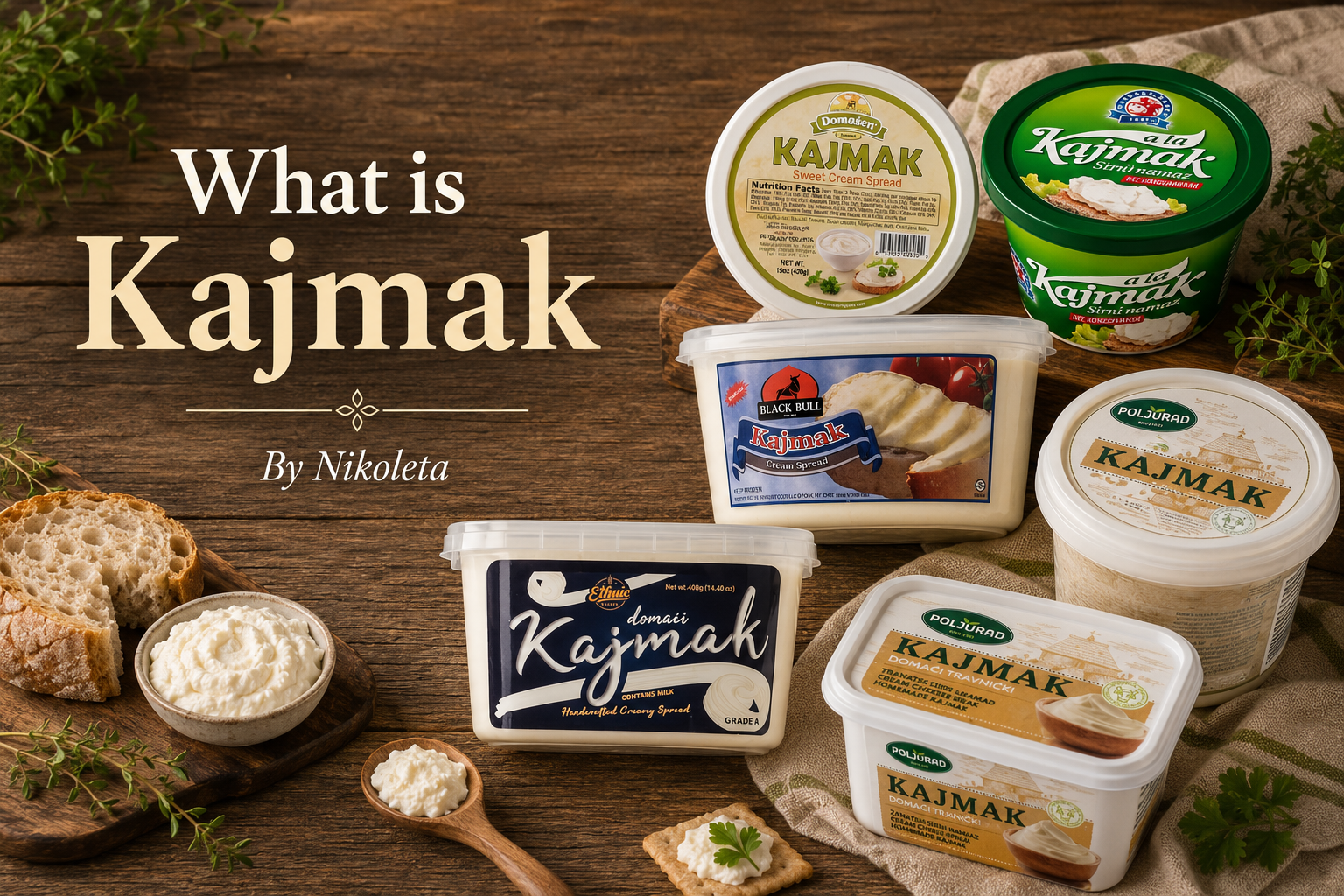
What is Kajmak?
Growing up as a first-generation Serbian-American in Cleveland, my childhood wasn't defined by peanut butter and jelly. Instead, the air in our house was usually thick with the scent of simmering milk. My parents brought their traditions with them from Arilje, a beautiful corner of Serbia where the pace of life respects the seasons and the kitchen is the heart of the home. Now that I’m raising my own three children here in Ohio, I find myself constantly reaching back to those roots, trying to preserve the "taste of home" in a world that moves far too fast. Today, I want to talk about the one ingredient that defines our table more than any other: Kajmak.
What exactly is Kajmak?
If you’ve never had the pleasure of trying it, describing kajmak is a challenge because it doesn't fit neatly into Western dairy categories. I often tell my friends it’s like the lovechild of a high-quality cream cheese and a salty French butter. It is a fresh, rich dairy product with a fat content that usually hovers around 60%, giving it a consistency that is creamy but not entirely compact. In the Balkans, it is our version of clotted cream, but with a tangy, savory soul that makes it uniquely ours.
In Serbia, kajmak is recognized as an original, native product. While you might find similar creams across the Middle East or other parts of South-East Europe under different names, there is a specific magic to the Serbian variety that has even earned it a spot on the national list of intangible cultural heritage. It’s not just a spread; it’s a living tradition passed down through generations of women who learned to feel when the cream was ready simply by watching and repeating the rituals of their mothers.
How Kajmak is made
One thing I’ve learned from my family in Arilje is that you cannot rush quality. Kajmak is the ultimate lesson in patience. It starts with fresh, full-fat milk—traditionally from cows, though sometimes sheep's milk is used.
The process is slow and rhythmic:
- The Boil: The milk is heated patiently until it reaches a simmer.
- The Rest: It’s then poured into wide, shallow dishes - traditionally wooden bowls called karlice - and left to cool slowly for several hours, sometimes up to a full day.
- The Skim: As the milk cools, a thick, condensed layer of fat and protein forms on the surface. This is what we call skorup.
- The Maturation: This thin layer is carefully removed, salted, and layered into wooden vats called čabrica to ferment and ripen.
There are no shortcuts or industrial substitutes that can replicate this. When you taste a version made in a factory, you can tell immediately - it lacks the lumpy, creamy complexity of the homemade stuff that remembers the rhythm of the farm.
Mladi vs. Zreli - choosing your flavor
In our house, we always have a debate about which type is better. There are two main stages of kajmak:
- Young Kajmak (Mladi): This is fresh, mild, and sweet. It’s usually consumed within a couple of weeks and has a lighter, whiter color. My kids love this spread thick on warm bread for breakfast.
- Aged Kajmak (Zreli): This is for the serious flavor seekers. It is left to mature for several months, becoming sharper, saltier, and turning a distinctive yellowish hue. It is much denser and is an essential ingredient in traditional dishes like Gibanica, our famous cheese pie.
The great regional debate
If you ever find yourself at a Serbian kafana (traditional tavern), you might hear a heated discussion about where the best kajmak comes from. While my heart is in Arilje, most people point to the mountainous regions of Western Serbia. The Zlatibor and Tara mountains are legendary for their fragrant pastures, which give the milk - and thus the kajmak - an unforgettable aroma.
There is even a bit of a "Kajmak Mafia" among the older generations. My own relatives in Serbia have elaborate systems for negotiating with specific farmers’ wives in towns like Kraljevo or Čačak to secure the best batches for the family. It is sold not just by weight, but by reputation.
Bringing the Balkan Table to Your Home
As a mother trying to balance a modern career in IT with my cultural heritage, I’ve found that food is the most effective way to keep my children connected to their roots. We might live in Cleveland, but when we sit down to a meal of Ćevapi (small grilled sausages) served "on kajmak," the distance between us and the Zlatibor mountains disappears.
The versatility of kajmak is what makes it a staple. You can use it as:
- An Appetizer: Spread on warm pogača or lepinja (flatbread).
- A Condiment: Melted over a grilled pljeskavica (Balkan burger) or steaks.
- A Breakfast Ingredient: Mixed into scrambled eggs or served with cicvara (cornmeal porridge).
For those of you living in the States, finding real, homemade kajmak can be tough since it’s rarely produced commercially to the same standard. However, we are so lucky here in the Cleveland area to have PV Euro Market right in Parma. They have been family-owned since 2004 and are truly a lifeline for those of us searching for the tastes we remember from our grandmothers' kitchens.
Whether you are buying a container of Mlekara Sabac A la Kajmak or looking for other varieties like Domasen Kajmak, I encourage you to try it. If you're feeling adventurous, you can even try making your own at home by skimming the cream from boiled milk, though it takes a few cycles to get a good amount.
In a world of standardized, factory-made food, kajmak stands as a defiant symbol of home, patience, and the beauty of tradition. It is a taste that, once you've experienced it, you will never forget. I hope this helps you bring a little bit of the Balkans to your own kitchen!
Since we’ve been chatting about my favorite Balkan staple, I know a few of you have had some follow-up questions about how to actually use and find this "creamy gold" here in the States. To help you bring a little piece of Arilje or Zlatibor into your own kitchens, I’ve put together this guide to the most common things people ask me when they first discover the magic of Kajmak.
Frequently Asked Questions:
1. What does Kajmak actually taste like? Is it sweet or savory?
This is the most common question I get at my dinner parties in Cleveland! It is hard to pin down because it sits right in the middle of everything we know in Western dairy. Imagine the buttery richness of high-end French butter mixed with the tangy, spreadable nature of cream cheese, but with the fluffy, light texture of clotted cream.
Because it has a fat content of about 60%, it is incredibly indulgent. The flavor itself is a beautiful balance: it is slightly salty because we salt each layer during the maturation process, but it also retains a natural sweetness from the fresh milk. Depending on how long it has fermented, you might also notice a very subtle sharpness or bitterness that makes it much more complex than just "salty butter". It is primarily a savory ingredient, though its creamy profile means it pairs beautifully with almost anything on the table.
2. What is the difference between "Young" and "Aged" Kajmak?
In my family, we use both for very different things. Young Kajmak (Mladi) is what you’ll usually find at breakfast. It is white, mild, and sweet, having only fermented for a few hours or days. It has a shorter shelf life - usually about two weeks - and is meant to be eaten fresh on warm bread.
Aged Kajmak (Zreli) is a different beast entirely. It is left to mature in wooden vats called čabrica for several months. As the liquid drains away, the cream becomes denser, saltier, and develops a distinctive yellowish hue. It has a much sharper, stronger flavor and can last up to six months. If you are planning to make a traditional Gibanica (our famous Serbian cheese pie), you absolutely need the aged variety to get that authentic, punchy flavor.
3. Can I make authentic Kajmak at home using regular supermarket milk?
This is where my "IT brain" and my "traditional brain" often clash. Technically, you can try, but you likely won't get the results you're looking for with standard supermarket milk. The problem is homogenization. Factory-processed milk has the fat globules broken up so they stay suspended in the liquid, which prevents that beautiful, thick layer of skorup (cream) from rising to the top.
To make real, traditional kajmak, you need fresh, full-fat, unhomogenized milk - ideally raw milk directly from a farm if you can find it. When you boil this kind of milk and let it cool slowly, the fat and proteins coagulate on the surface to form the "skin" that eventually becomes kajmak. If you're stuck with supermarket milk, you'll end up with a very thin, disappointing film instead of the lumpy, rich spread we love.
4. Why is Kajmak considered part of "intangible cultural heritage"?
In Serbia, we don't just see kajmak as a food; we see it as a living tradition. It was officially recognized because the skills required to make it cannot be replicated by a machine in a factory. It is a form of domestic wisdom passed down from mothers to daughters over centuries.
There is no written manual that tells a farmer exactly when the cream is "ready" to be lifted - it’s something they learn by feeling, watching, and repeating the ritual thousands of times. It represents our connection to the mountainous pastures of Western Serbia and a way of life that respects the slow rhythm of nature. When you eat kajmak, you aren't just eating dairy; you’re tasting a piece of Serbian identity that has remained unchanged for generations.
5. How do I serve Kajmak like a true Serbian host?
If you want to impress your guests, skip the fancy platters and go for the classics. The absolute gold standard is serving it with warm lepinja (flatbread). You want the bread just hot enough that the kajmak starts to melt into the dough, making it soft and juicy.
It is also the essential side dish for any grilled meat. If you order Ćevapi or a Pljeskavica (Balkan burger) in a traditional kafana, it will almost always come "on kajmak," where the heat from the meat melts the cream into a rich sauce. For breakfast, we often mix it into Cicvara (a rich cornmeal porridge) or simply serve it alongside some dry cured meats.
6. Where can I buy Kajmak in the US if I can't make it myself?
Since authentic, homemade kajmak is almost impossible to find in standard American grocery stores, many of us expats rely on specialty markets. If you’re in the Cleveland area, you already know my go-to is PV Euro Market in Parma. They carry several varieties that bring those memories of home right to your fridge.
You can find excellent options like Mlekara Sabac A la Kajmak, which is a wonderful, creamy version of the "young" style. They also offer Domasen Kajmak and even versions mixed with peppers for a little extra kick. While nothing beats the wooden vats of a Serbian farm, these are the best ways to get that specific, nostalgic flavor without having to fly to Belgrade.