
What is Vegeta? - the secret ingredient in every Balkan kitchen
If you’ve ever walked into my shop, PV Euro Market, and asked me what one item you absolutely need in your pantry to make your cooking taste "authentic", I wouldn’t point you toward the expensive oils or the fancy chocolates first. I’d walk you straight to the blue bags with the winking chef on the cover.
Of course I’m talking about Vegeta.
For those of us who grew up in the Balkans or Eastern Europe, Vegeta isn't just a seasoning; it’s a childhood memory. It’s the smell of our grandmother’s kitchen on a Sunday afternoon when she was simmering a pot of sarma (cabbage rolls) or prepping ćevapčići for the grill. It is, quite literally, the "Prince of all seasonings".
As the owner of PV Euro Market, I see people from all over the world discover this "magic dust" for the first time. Whether you’re a professional chef or someone just trying to make a decent weeknight soup, Vegeta is the ultimate "cheat code" for flavor. Today, I want to take you on a journey through the history, the composition, and the many ways you can use this Croatian staple to transform your cooking.
What Exactly is Vegeta?
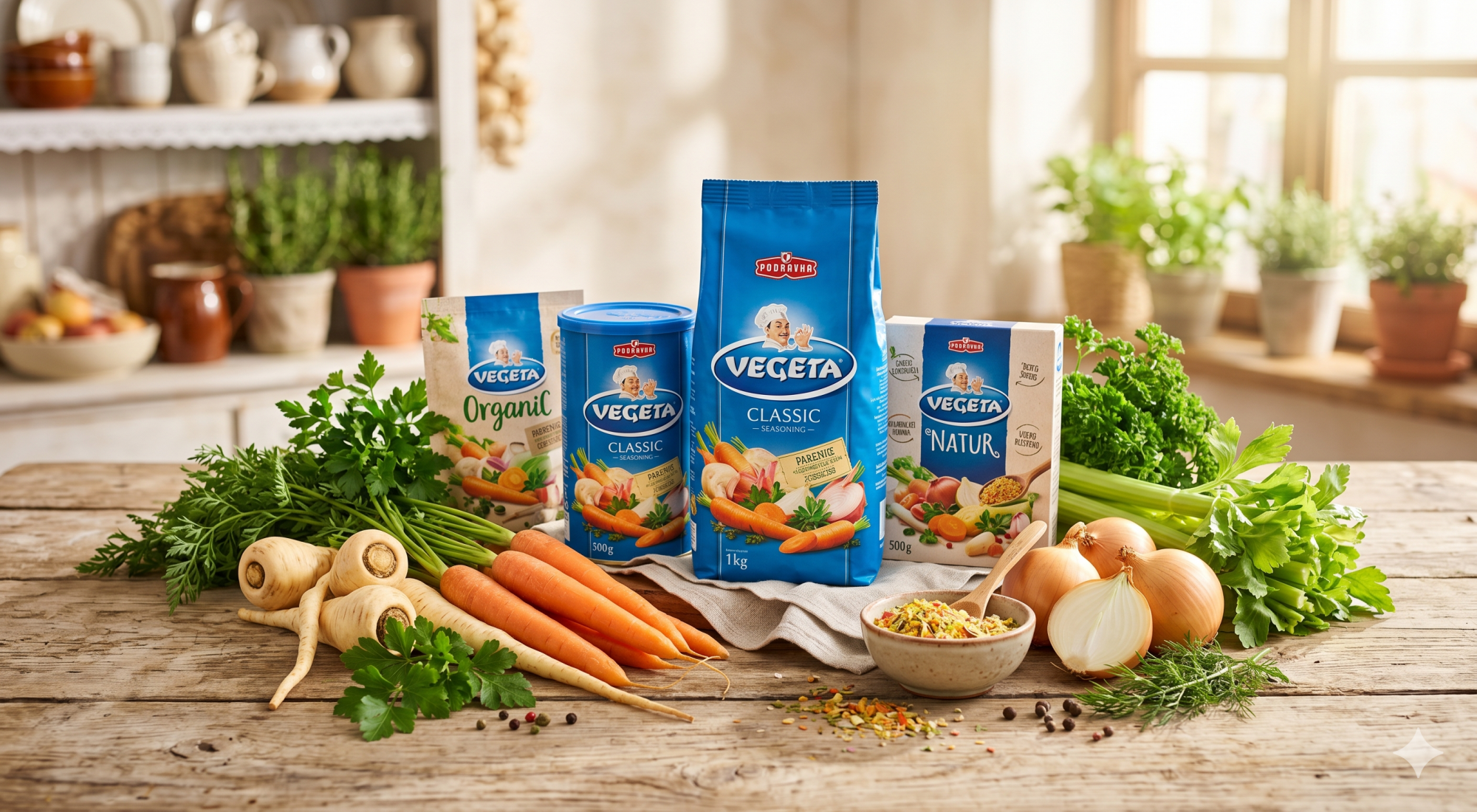
At its core, Vegeta is an all-purpose savory seasoning made from a unique blend of the finest vegetables, herbs, spices, and select natural ingredients. If you look at the back of the package, you’ll see a list of dehydrated vegetables that sounds like a traditional soup base: carrots, parsnips, onions, celery, and parsley leaves.
Think of it as a concentrated, dried mirepoix. It’s savory and salty. While the classic version contains MSG (monosodium glutamate) to give it that irresistible savory punch, we also carry Vegeta No MSG versions for those who prefer to keep things a bit more natural.
One thing I always tell my customers: Vegeta is vegan-friendly. Even though it has a deep, "meaty" savoriness similar to a chicken bouillon, it contains no animal products, making it a fantastic tool for plant-based cooking.
A Story 60 Years in the Making
Vegeta’s story began over 60 years ago in the culinary heart of Croatia. It was developed in 1958 in the laboratories of Podravka, a company located in the rich agricultural region of Podravina.
The genius behind the blend was a woman named Zlata Bartl, affectionately known in Croatia as "Auntie Vegeta" (Teta Vegeta). She led the team that created "Vegeta 40," which was first sold in 1959. What started as a local secret quickly became a global phenomenon. By 1967, it was being exported to Hungary and the Soviet Union, and today, it’s a household name in over 40 to 60 countries.
In fact, Nielsen* named Vegeta the best-selling universal food seasoning in Europe in 2021. From its humble beginnings in Koprivnica, it has truly conquered the world of modern cooking. And for the record - to my younger customers and anime fans - no, it has nothing to do with the character from Dragon Ball Z, though I like to think the seasoning is just as powerful!
How to Use Vegeta in Your Kitchen
The beauty of Vegeta is that it is truly all-purpose. If a dish is savory, it can probably benefit from a dash of Vegeta. Here is how I use it in my own home and what I recommend to our shoppers at PV Euro Market:
1. The ultimate soup and stew enhancer
This is where Vegeta shines brightest. Whether you’re making a traditional Balkan goulash or a simple chicken noodle soup, adding a teaspoon of Vegeta brings out a burst of flavor and adds "mouth-watering taste complexity". I like to add a tablespoon to the pot after frying my aromatics (like onions and garlic) but before adding the liquid. This lets the seasoning "toast" in the oil and bloom, releasing all those vegetable aromas.
2. Meat and seafood marinades
Vegeta is the "gourmet cook's long-time secret" for roasts and grills. Before you throw those chicken thighs or pork chops on the barbecue, rub them with a bit of oil and a generous sprinkle of Vegeta. It enhances the original taste of the meat without covering up its natural aroma.
3. Veggies with a "Garden Fresh" Aroma
Believe it or not, Vegeta works wonders on vegetables. A dash of it on top of a fresh salad or steamed greens enhances the "garden fresh taste". At PV Euro Market, we even carry specialized blends like the Vegeta Natur Salad Seasoning to make your greens pop.
4. The "Finishing Salt" Method
While many prefer to cook with it, you can also use Vegeta as a table salt. I’ve seen some of my more adventurous customers on TikTok even sprinkle it on fries or, believe it or not, H&H bagels for an extra savory kick.
Why We Direct-Import Vegeta
At PV Euro Market, we take pride in being your bridge to the flavors of Europe. We don't just stock one type of Vegeta; we carry the entire family of products because we know every cook has a different preference.
If you are just starting out, I recommend picking up the classic Podravka Vegeta 500g Bag. It’s the standard size that fits perfectly in any pantry. For the heavy users (and believe me, once you start, you’ll be a heavy user), we have the Vegeta 2kg Bag to ensure you never run out mid-recipe.
We also stock:
- Vegeta Natur: Made with all-natural ingredients for the purists.
- Vegeta Organic: For those who want the highest quality certified organic ingredients.
- Specialty Mixes: From BBQ Seasoning to Potato Seasoning, these are perfectly balanced for specific dishes
From our field to your table
One reason I stand behind Podravka products is their commitment to quality and sustainability. They grow many of their own vegetables in the rich soil of Croatia and use "farm to fork tracking" to ensure that only the best ingredients make it into that blue bag.
When you buy Vegeta from PV Euro Market, you’re not just buying a spice; you’re buying decades of Mediterranean culinary tradition. You’re buying the secret ingredient that makes a simple meal taste like it was prepared by a professional chef - or better yet, by a Balkan grandmother.
So, the next time you’re browsing our site or visiting us in Parma, Ohio, grab a bag of Vegeta. Start small - maybe just a pinch in your next pot of rice or a dash on your roasted chicken - and you’ll soon realize that your food finally has that "last bit of flavor" you never knew it was missing.
Ready to experience the magic of the "Prince of all seasonings" for yourself? Whether you need the classic blue bag, the No MSG version, or specialty Natur mixes, we have the perfect fit for your pantry. At PV Euro Market, we take pride in bringing these authentic Croatian staples directly to your kitchen. Don’t let your next meal miss that last bit of savory perfection. Visit us - to browse our full selection!
Happy cooking, and as we say back home, Prijatno!
*Nielsen – NIQ, also known as NielsenIQ – global marketing research firm, with worldwide headquarters in Chicago, Illinois, US. The company has approximately 30,000 employees and operates in more than 100 countries.
References:
- Wikipedia: https://en.wikipedia.org/wiki/Vegeta_(condiment)
- Vegeta: https://vegeta.com/us/about/
Frequently Asked Questions:
As the owner of PV Euro Market, I get asked a lot of questions about the "blue bag with the chef." To help you master this kitchen staple, I’ve put together six of the most frequently asked questions we hear in the shop.
1. What exactly is Vegeta made of?
Vegeta is a unique, savory blend of dehydrated vegetables, salt, and spices. Specifically, it contains a "dried mirepoix" base of carrots, parsnips, onions, celery, and parsley leaves. It’s designed to add a complex, rich flavor to your dishes that salt alone just can’t provide.
2. Is Vegeta vegan or vegetarian?
Yes! One of the best things about Vegeta is that it provides a deep, meaty savoriness - often compared to chicken bouillon - without using any animal products. It is entirely vegan-friendly and a fantastic way to add "oomph" to plant-based stews and roasted vegetables.
3. Does it contain MSG?
The original Vegeta All Purpose Seasoning does contain MSG (monosodium glutamate) to enhance its satisfying richness. However, for those who prefer to avoid it, we carry the Vegeta No MSG and Vegeta Natur versions, which use only natural ingredients to achieve that classic flavor.
4. How much Vegeta should I use in my cooking?
Since Vegeta is quite salty and potent, I always recommend you "taste as you go". A good rule of thumb is to use one teaspoon (approx. 3g) for every 250ml of soup or sauce, or for every 250g of meat or vegetables. You usually don’t need to add extra salt when using Vegeta.
5. Where did Vegeta originate?
It was created over 60 years ago in Croatia. It was developed in 1958 at the Podravka company labs by a scientist named Zlata Bartl, who is affectionately known as "Auntie Vegeta" (Teta Vegeta) back home. Since then, it has become a staple in kitchens across more than 40 to 60 countries.
6. Can I use Vegeta on things other than soup?
Absolutely! While it’s famous for stews and goulash, it’s truly all-purpose. You can use it as a dry rub for meats and fish, sprinkle it on popcorn, add it to fried rice, or even use it as a savory topping for bagels and fries. It’s the ultimate "secret ingredient" for anything savory.